





Exclusive Launch Offer: Get Upto 30% Off on All Products!
Menu

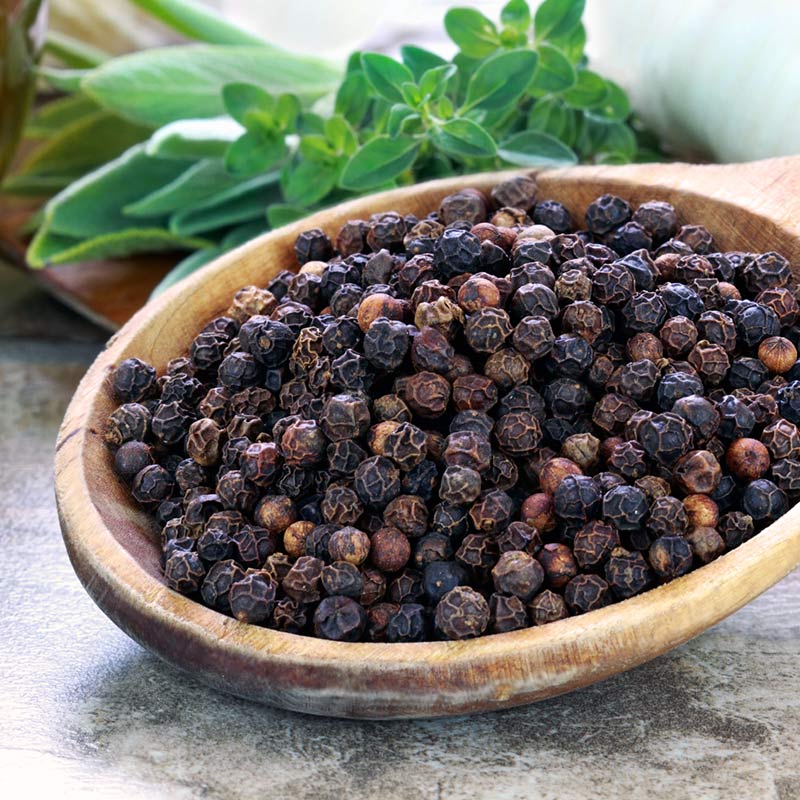
BLACK PEPPER

PIPER NIGRUM

✦ Ayurvedic Herb
Scientific Name : PIPER NIGRUM
Parts Used : Fruit
Common Names : Kalimirch / Cavyam
Rasa (Taste) : Katu (Pungent)
Guna (Qualities): Laghu (Light), Teekshna (Strong, Piercing)
Virya (Potency) : Ushna (Hot)
Vipaka : Katu (Pungent)
Pharmacological Activity : Vata (Air), Kapha (Earth & Water)
Bioactive Compounds : Piperine

About BLACK PEPPER

The pepper plant is a perennial woody vine rowing up to 4 metres (13 ft) in height on supporting trees, poles, or trellises. It is a spreading vine, rooting readily where trailing stems touch the ground. Black pepper is native to Kerala, the southern state of India. Black pepper can be grown in a wide range of soils with a pH of 5.5 to 6.5, though in its natural habitat it thrives well in red laterite soils, hills at an elevation of 800-1500 m above sea level, where the crop is mostly grown on shade trees in coffee, cardamom and tea plantations.

In Ayurveda, Black Pepper is a common herb. It is traditionally considered to be a hot, pungent herb that stimulates Agni, or digestive fire, by supporting the secretion of fluids and circulation of blood in the GI tract. Pepper has been used as a spice in India since prehistoric times. It was probably first cultivated on the Malabar Coast of India, in what is now the state of Kerala. Peppercorns were a much-prized trade good, often referred to as black gold and used as a form of commodity money. The term peppercorn rent still exists today.

Boosts Nutrient Absorption: Black pepper can enhance the absorption and function of certain nutrients and beneficial compounds. it's outermost layer contains phytonutrients, which helps to break down fat cells, and also increases metabolism and helps your body to get rid of excess water and toxins. Powerful Antioxidant: Black pepper is rich in a plant compound called Piperine, which test-tube studies have found to have potent antioxidant properties. Studies suggest that a diet high in antioxidants may help prevent or delay the damaging effects of free radicals. Stimulates Digestion: The Piperine in black pepper eases digestion and stimulates the stomach, which then secretes more hydrochloric acid that helps to digest proteins in food & helps in cleaning your intestines. Relieves Cold and Cough: Black pepper is antibacterial in nature, and therefore helps to cure cold and cough. It also helps to alleviate chest congestion, often caused due to pollution, flu, or a viral infection.