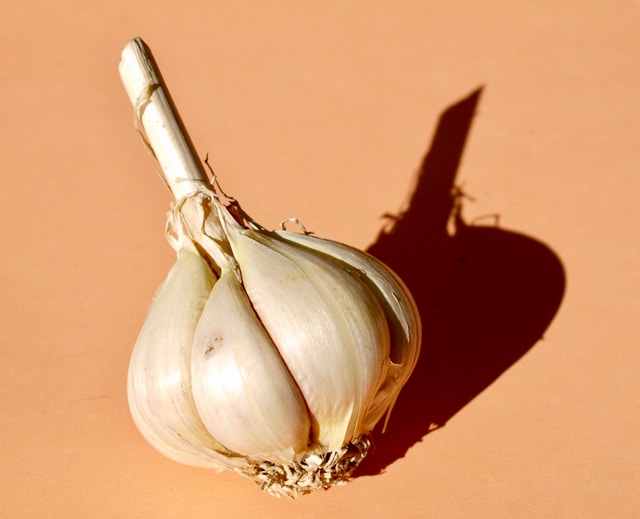
Garlic is the second most widely used cultivated Allium after onion. It has long been recognized all over the world as a valuable spice for foods and a popular remedy for various ailments and physiological disorders. The potency of garlic has been acknowledged for more than 500 years. In the ancient times, garlic was used as a remedy for intestinal disorders, flatulence, worms, respiratory infections, skin diseases, wounds, symptoms of aging, and many other ailments. Through the middle ages into World War II, the use of garlic to treat wounds surfaced repeatedly. It was ground up or sliced and was applied directly to wounds to inhibit the spread of infections.
Garlic is rich in potassium, calcium, magnesium, iron, protein, arginine, zinc, saponins, polyphenols, and selenium. Moreover, it is a good source of certain vitamins like Vitamin A, Vitamin B6, and B1 and Vitamin C 14. The unique flavour and health-promoting functions of garlic are generally attributed to its rich content of sulphur-containing compounds, i.e., alliin, g-glutamyl cysteine, and their derivatives.