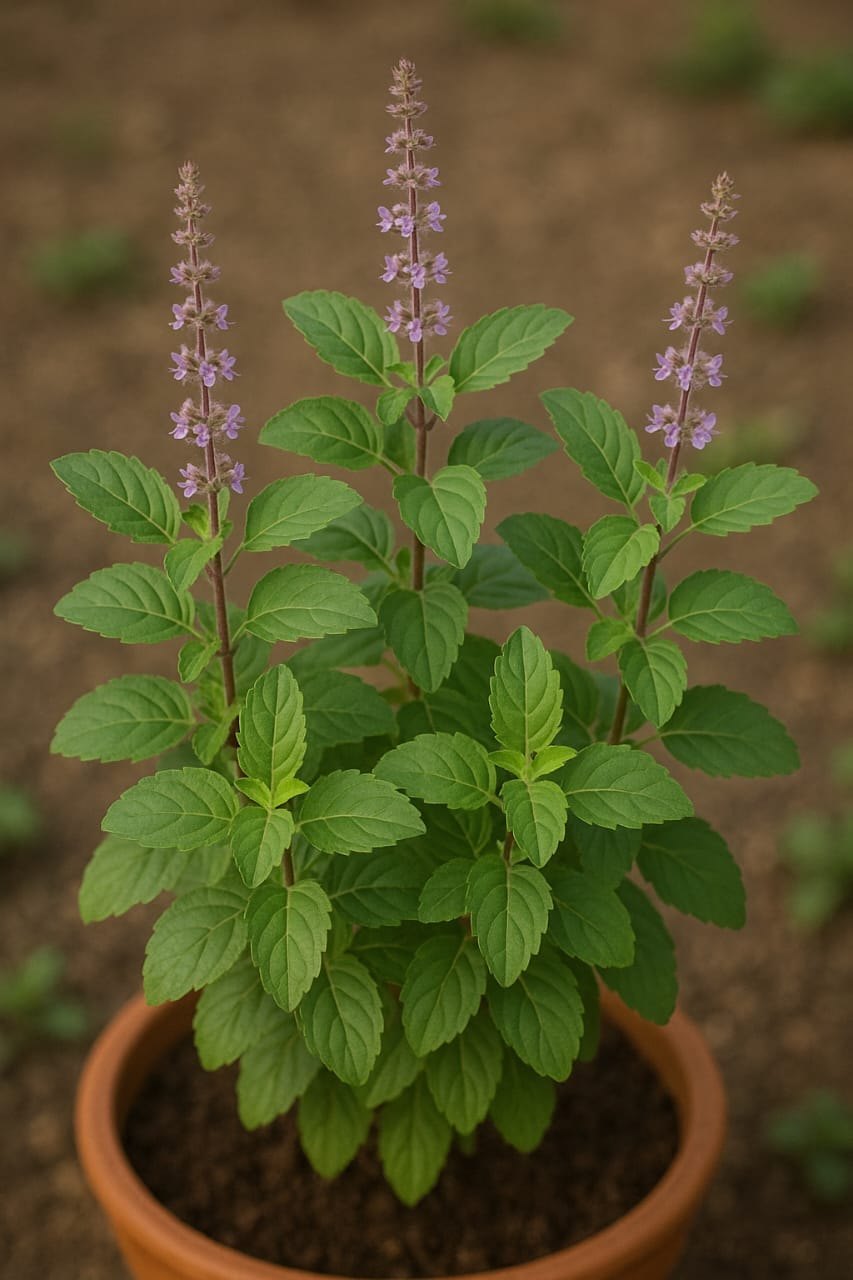
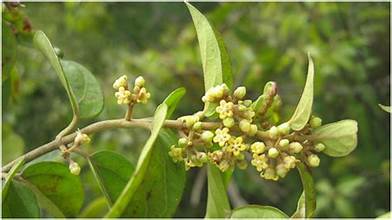
Tulsi, known by the scientific name, Ociumum sanctum, in India is ubiquitous in Ayurvedic tradition. Tulsi is a Sanskrit word which means “matchless one”. It is called by names like Rama Tulsi & Krishna Tulsi in Sanskrit and Holy Basil in English. It is probably the most widely known and common household herb in the Indian sub-continent. It is considered sacred, and rightly so, owing to its diverse healing properties. Within Ayurveda, Tulsi is known as “The Incomparable One,” “Mother Medicine of Nature” and “The Queen of Herbs,” and is revered as an “Elixir of Life” since it promotes longevity.
Tulsi has mentions in the Rigveda and has been used for its therapeutic properties since 5000 B.C. Different parts of plant are used in Ayurveda and Siddha Systems of Medicine for prevention and cure of many illnesses and everyday ailments like common cold, headache, cough, flu, earache, fever, colic pain, sore throat, bronchitis, asthma, hepatic diseases, malaria fever, as an antidote for snake bite and scorpion sting, flatulence, migraine headaches, fatigue, skin diseases, wound, insomnia, arthritis, digestive disorders, night blindness, diarrhea and influenza and also to keep away mosquitoes and flies.